
NEAR FUTURE
An analysis of the Spanish residential market makes it clear that there has been an upturn in new developments. This implies that the potential demand for housing in Spain will reach close to 180,000 units in the period between 2016 and 2025.
One out of every seven houses will be built in northern and central zones of the Community of Madrid (25,714 homes), where Madrileña Red de Gas operates. The growth forecast for the territory of MRG is 12,000 homes per year in the residential new build market, at a sustained rate until 2025. Currently, in municipalities such as Pozuelo de Alarcón and Alcobendas, there has been a notable increase in feasibility studies prior to the management and urbanisation of new land. In the cases of San Sebastián de los Reyes, Boadilla del Monte and Tres Cantos, there is already land ready to build on.
According to figures from the National Institute of Statistics (INE), if we consider the socio-economic situation of the municipalities in which Madrileña Red de Gas performs its activity, we are the distributor of natural gas in nine of the 20 municipalities with the highest net annual average income in Spain, and in nine of the ten municipalities with the highest income in the Community of Madrid. This fact has a positive impact on the typology of the houses already built, which are large, usually single-family, and occupied by families with a relatively large number of members living at the same address and with relatively high energy and comfort requirements.
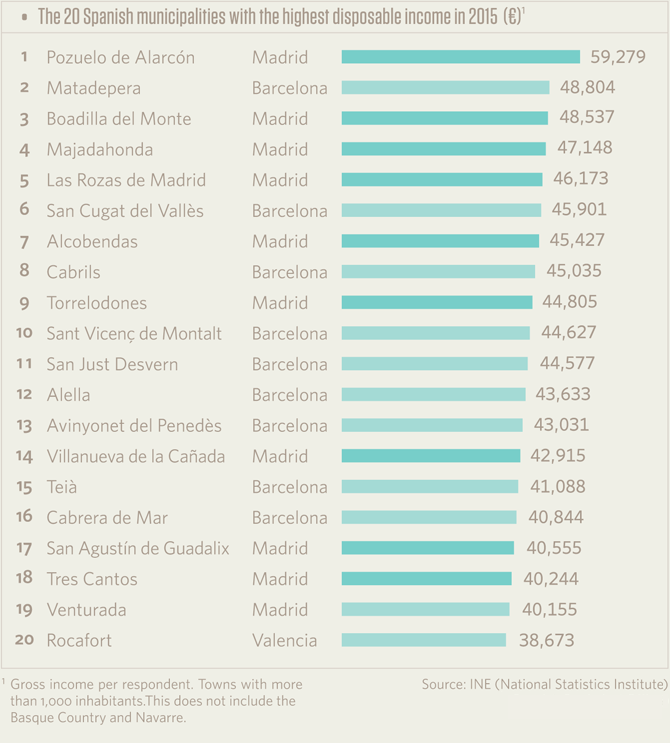
In addition, they have one of the largest levels of consumption of natural gas in Spain, since the penetration of natural gas in the housing of these municipalities is more than 70% and the climate is continental (cold winters).
Again according to figures from the National Spanish Institute of Statistics (INE) in relation to unemployment, Madrileña Red de Gas is the distributor of natural gas in five of the ten municipalities with the lowest unemployment rate.
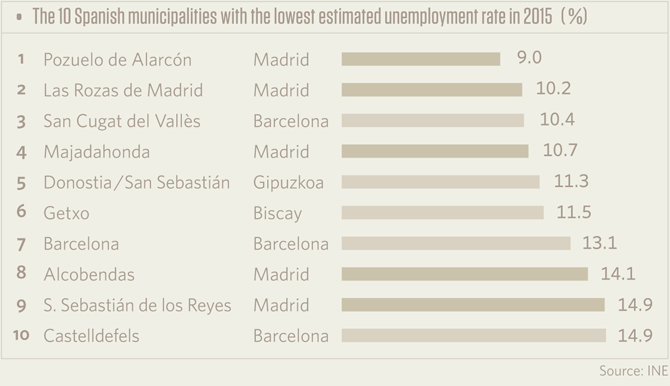
All of the above – analysis of the residential market, municipalities with the highest income, lowest unemployment rate, etc. – makes it clear that in the near future, in the territory where Madrileña Red de Gas operates, the reactivation of new housing is already a reality.
In our area there are a total of 4,350 homes under construction, of which 45% have already been sold and will be available for occupation within a maximum period of ten months.
It is in these municipalities, with high incomes and a low unemployment rate, that the work of preparation of land for new development by estate agents is accelerating. Currently, there is planning space for a total of 22,628 homes in the above-mentioned municipalities; they will be available for building within a maximum period of 25 months.
EXPANSION
The continuous study of the evolution of the demand for natural gas and the annual growth of the number of users for the domestic-commercial sector carried out by Madrileña Red de Gas guarantees the fulfilment of the investment target for the development of our distribution network, since domestic and commercial consumption accounts for 20% of the total consumption of gas in Spain. In the case of the Community of Madrid, the scope for action of Madrileña Red de Gas amounts to 77%.
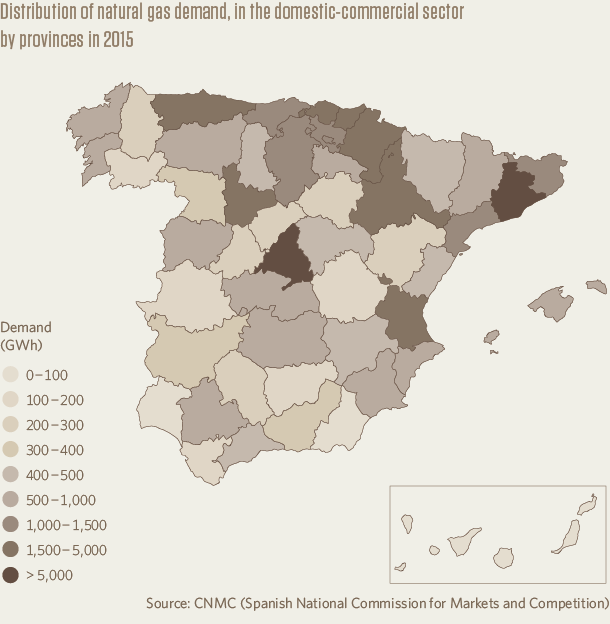
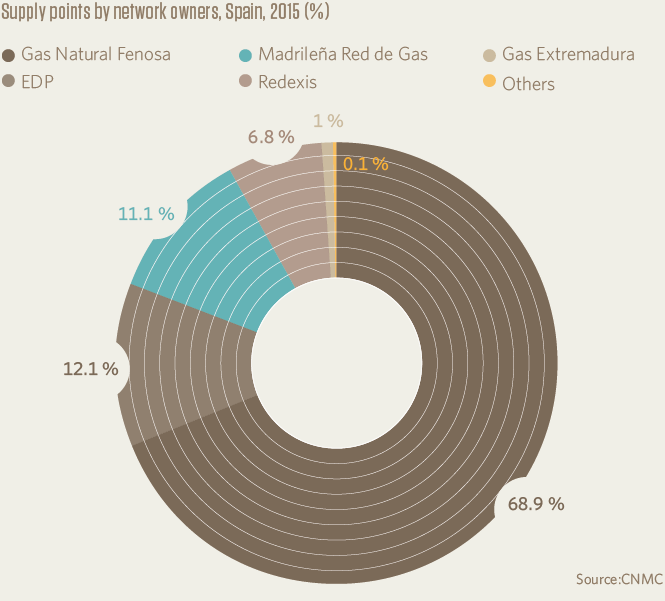
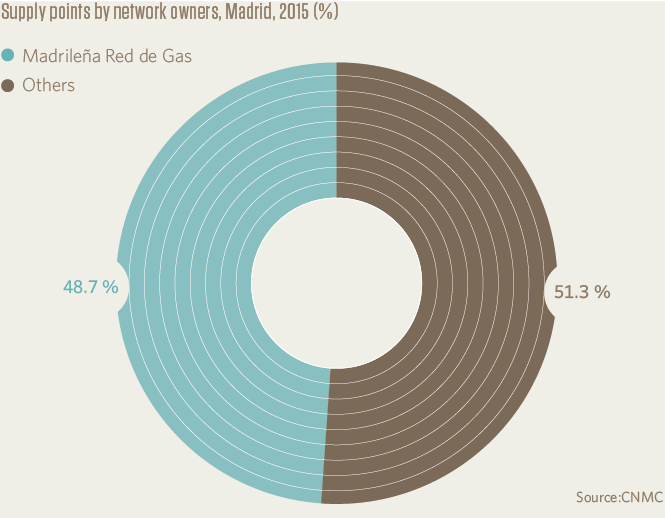
With more than 1.73 million users and total consumption of 16.4 TWh/year, Madrid is the Spanish autonomous community with the greatest growth in number of consumers. Of the total supply points in the region more than 48.7% belong to MRG. Proof of this growth has been the construction and commissioning, during the current financial year, of a range of facilities and LNG plants in several municipalities of the Community of Madrid.
Construction and commissioning:
- Line of Quijorna, with 378 supply points.
- Line of El Vellón, with 67 supply points.
Commissioning:
- Plant 22 of Gomez Ulla Hospital with an estimated consumption of 0.7 GWh/year.
- Hospital in Alcala de Henares with an estimated consumption of 11.2 GWh/year.
Commissioning of LNG plants:
- Guadalix de la Sierra, with 374 supply points.
- Talamanca de Jarama, with 248 supply points.
- Torrelaguna, with 194 supply points.
- Valdetorres de Jarama, with 125 supply points.
- Zarzalejo, with 13 supply points.
The achievement of our development targets strengthens the position of Madrileña Red de Gas as the third distributor of gas by supply points, as shown by the report of the CNMC (National Commission of Markets and Competition) for the fourth quarter of 2015.
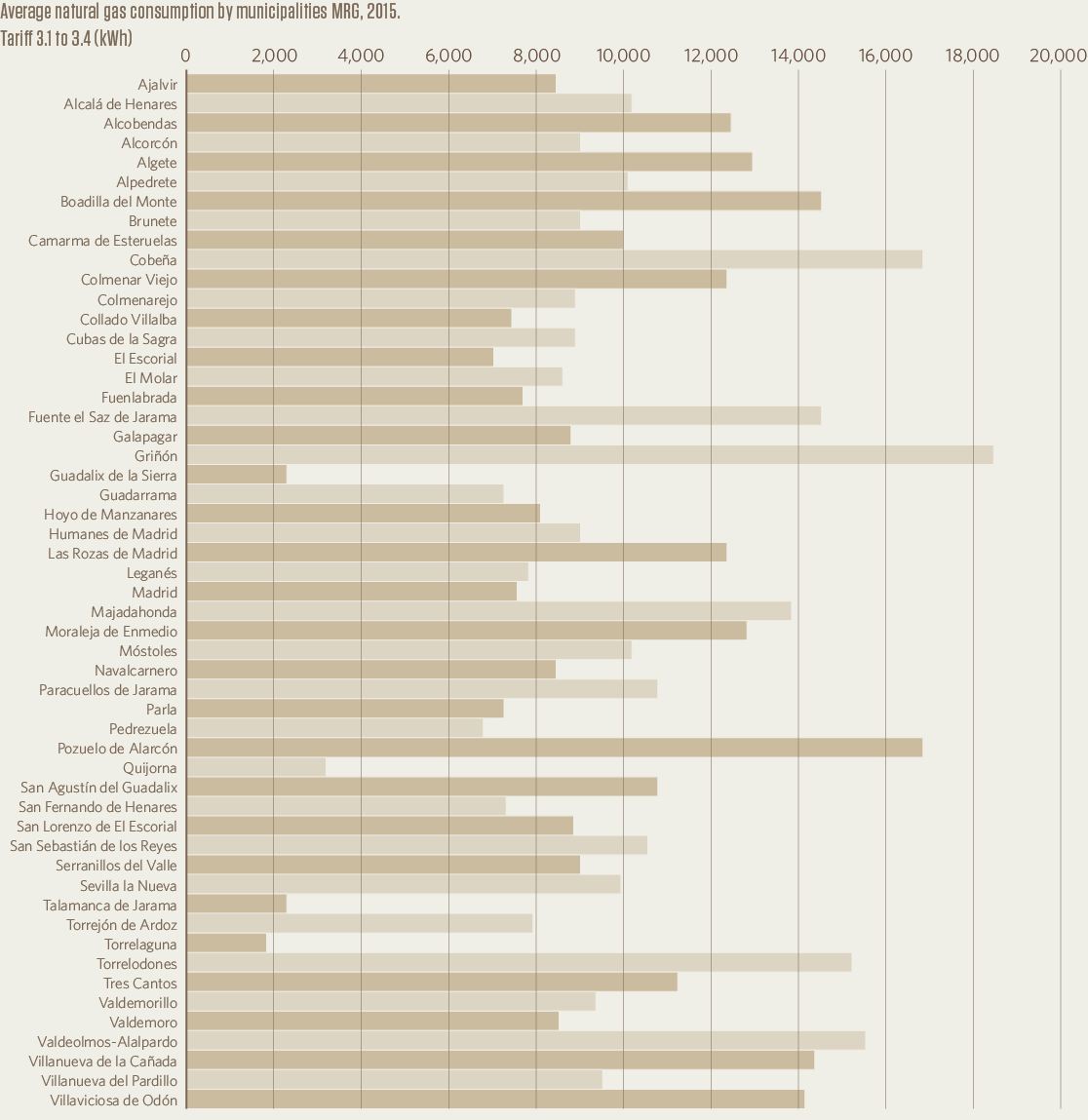
During this financial year, MRG has sustained consumption above 9,150 kWh per year in customers on tariffs 3.1 to 3.4, in 60% of the municipalities in which the company operates.
INORGANIC GROWTH
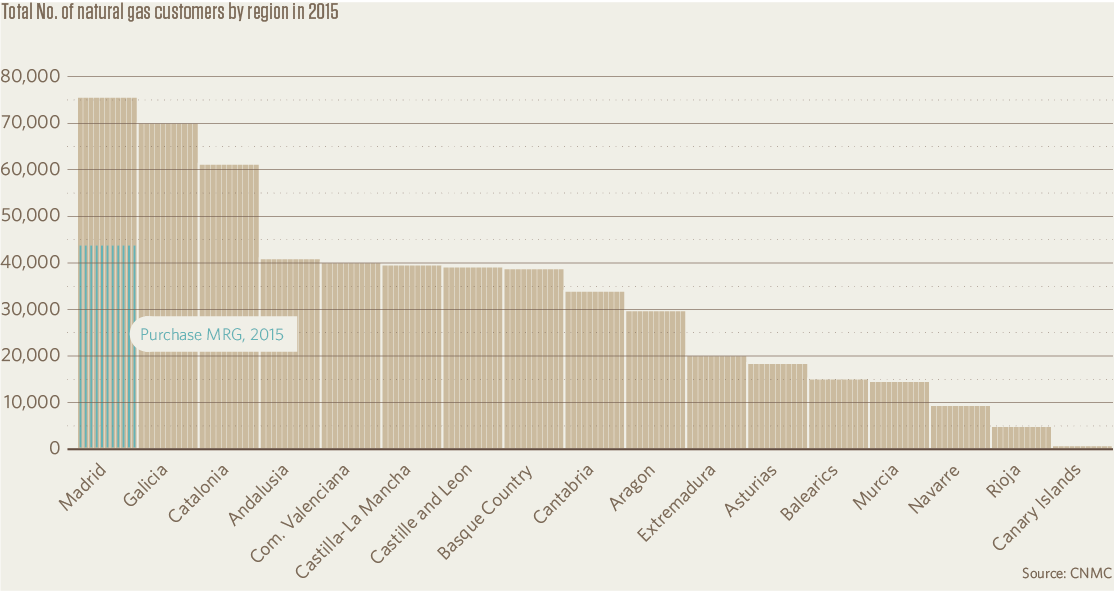
In keeping with our commitment to maintain sustained inorganic growth within the Community of Madrid, during this year Madrileña Red de Gas has completed the acquisition of 548 LPG plants from various operators (Repsol, Cepsa, Vitogas, Xucrogas…) for conversion to natural gas. This figure represents 43,817 new supply points. The most important single acquisition has been the purchase from Repsol of 516 plants, with 42,534 supply points.
Change of scenario: LPG for natural gas
The market
In Spain, the number of customers for the regulated supply of piped LPG was 546,222 at the end of 2015.
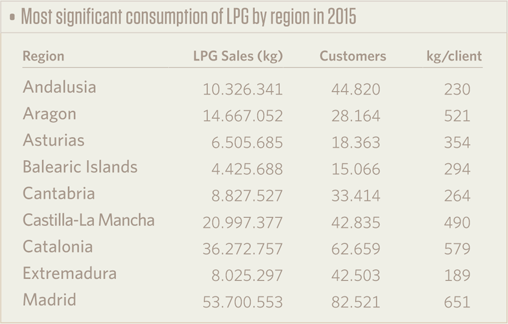
The Community of Madrid has 20.62% of the total demand for piped LPG and is the Spanish autonomous community with the highest consumption per customer, which is around 650.75 kg per year, equivalent to 9.01 MWh/year of natural gas.
The 516 plants acquired from Repsol are located in 55 municipalities in the distribution area of Madrileña Red de Gas and are concentrated on the Western axis of our territory.
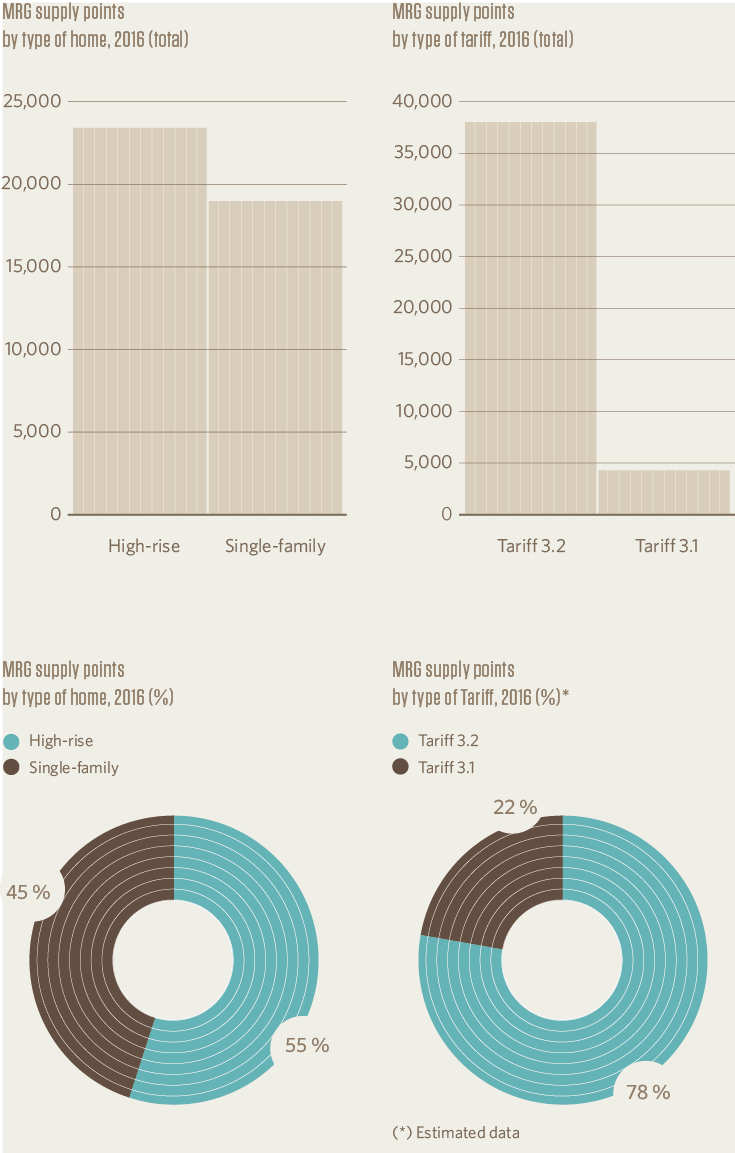
These plants represent 42,534 new supply points for Madrileña Red de Gas. Of them, 55.2% (23,485) are flats, and 44.8% (19,049) are single-family homes. Sorted by tariffs, they account for 22 per cent (9,357) at tariff 3.1 and the remaining 78% (33,177) at tariff 3.2, with average consumption by tariff of 3,100 kWh/year for 3.1 and 10,664 kWh/year for 3.2.
The conversion
The conversion of the new supply points creates significant environmental benefits, since they considerably reduce CO2 emissions. Total emissions for the 42,534 supply points acquired stand at 16,874 tonnes per year, which represents a fall of 17%. This equates to a reduction of CO2 emissions by 397 kg/year per home.
In addition, the facilitation of the use of natural gas as an alternative energy source to LPG has considerable advantages in relation to costs, distribution, energy efficiency, etc. For this purpose, Madrileña Red de Gas has already launched the conversion process in several of the 548 LPG plants. The process will be completed as the necessary authorisations are obtained.
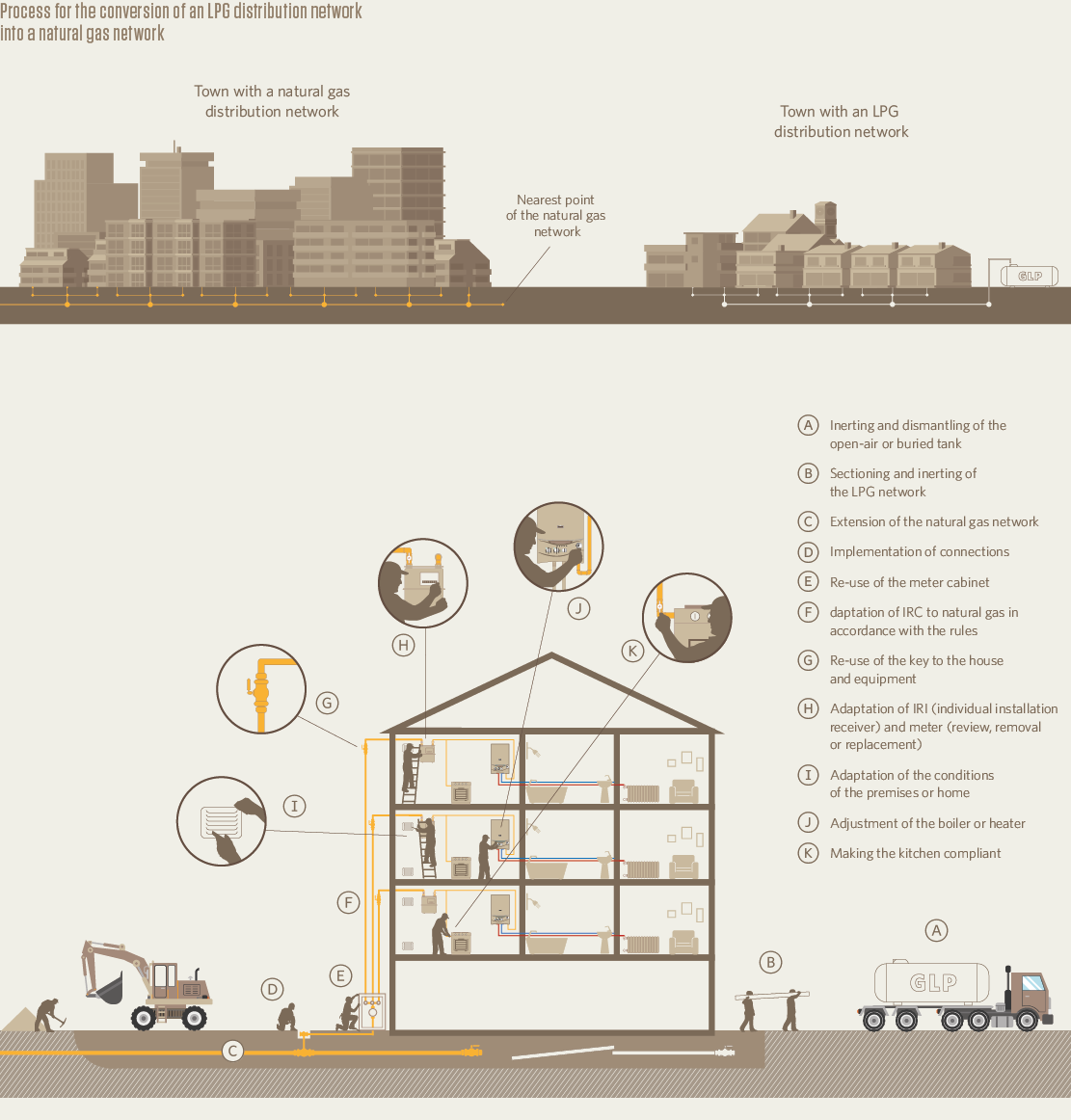
In general, the process of converting homes which are supplied by LPG from a storage facility is a complex operation which Madrileña Red de Gas has already standardised.
As a prior step to the conversion, MRG will check the changes necessary to adapt the common reception plants to new supply with natural gas and the regulations in force. In addition, it is performing the necessary connection to the natural gas distribution network and inspecting the supply points to be converted, in order to make an inventory of the equipment and check the physical condition of the premises, as well as their adaptation to the regulations in force. Any necessary adaptations will be carried out, for example, to vents.
A few days before completing the conversion, Madrileña Red de Gas will inform users of the date for the execution of the works, as the necessity to access the homes of users and for them to be present at the time of the change of the equipment.
On the day of the conversion, first thing in the morning, MRG operators arrive to cut off the supply of propane and empty the network. The residual propane is burned off, because, since it is a gas denser than air, it does not disperse into the atmosphere. There is then a pressure test to ensure the sealing of the installation to be converted and, once completed, the connection of the installation to the natural gas network begins.
When natural gas is already flowing through the installation, the operators begin to perform the conversion of the appliances, whether for dwellings or premises. This involves the use of official kits from the manufacturers of the different devices installed, which have already been determined from the survey carried out previously..
The operation depends on the size of the installation and is completed on the same day; its estimated duration is five to eight hours. In the event that the user cannot be at home during the conversion of the appliances, the installation is shut-off and a new appointment is made.
QUALITY
In Madrileña Red de Gas we believe that mistakes are opportunities that lead to continuous professional improvement for the achievement of our objectives. That is why quality management is a fundamental part of our processes and allows us to anticipate in an agile way the expectations of our users, with coordination of expectations, productivity and profitability. To achieve the right result in terms of quality, Madrileña Red de Gas requires a daily commitment to our users, which means giving more and better solutions to their needs, by efficiently managing procedures. We are aware of the need to be fiercely competitive in order to obtain the highest degree of satisfaction of our customers.
Certificates
Madrileña Red de Gas has certified its quality management system according to the standard UNE-EN ISO 9001:2008 from Tüv Rheinland, whose scope covers the critical processes of our activity. This measure has reinforced the intentions of the Board, as set out in the company’s quality policy.
For MRG the implementation of a quality system brings numerous advantages, resulting in a medium-term increase of the productivity of the company. This initiative focuses on the following:
- Standardisation of activities developed in the company by internal or external means through the definition of criteria in internal regulatory documents that contribute to better control of processes.
- Promotion of the satisfaction of the recipients of our services.
- Measuring and monitoring the performance of the processes.
- Increase in the effectiveness and efficiency of the company in the achievement of its objectives.
- Continuous improvement in processes, products, management, etc.
- Minimisation of the impact of the production or provision of services.
- Improvement in the training and qualification of the employees and contractors; in the case of the latter, we carry out processes for the vetting of their personnel.
Thus, the basic structure of the quality management criteria is part of the philosophy of making use of the synergies associated with the integrated management system for prevention, the environment and quality at Madrileña Red de Gas. This structure is completed with the specific quality procedures that have been considered necessary, such as the management of claims, customer surveys or the vetting of personnel of providers, in particular.
The quality system of Madrileña Red de Gas sets goals for each financial year. In the current financial year, these goals are focussed on improving the documentation of internal processes, for example those of periodic inspection, household operations, verification and metering, urgent care and maintenance of the network, as well as the identification and implementation of measures affecting the satisfaction levels of users. All of this is subject to the application of the continuous improvement cycle. In addition, we have defined a follow-up table with more than 20 quality indicators associated with the critical processes that allow us to track their performance. In addition, periodic audits help the company to identify opportunities for improvement and any deviations.
Looking ahead, the intention is to develop the existing quality system, in line with the requirements of the new standard UNE-EN ISO 9001:2015, by introducing new concepts such as the “risk management” approach.
Adaptation to regulatory change
We have made all the necessary adjustments to provide a greater degree of information to the salesforce in terms of the prediction of demand and provision of information, as stipulated in memorandum 2/2015 of the CNMC on 22 July and in the resolution of 23 December 2015, which approved PD-17 “Provision of information” as well as the adjustments required in the detailed Protocol PD-02 “Procedure for the distribution of connection points for TDCP and DDCP”, featured in the resolution of 4 May 2016 in the same memorandum, and the adjustments required in terms of deliveries, gas balances and demand forecasting.
It should be noted that MRG has successfully complied with all the terms of publication and quality of data required in the third final provision of the EIT/2355/2014 of 12 December, which entered into force on 1 March 2015 and which provides a system of incentives to comply with the deadlines for publication and quality of information in the process of deliveries and daily balances.
On the other hand, with respect to information to end customers, the entry in force of Royal Decree 1085/2015, of 4 December, on the promotion of biofuels, amends some articles of Royal Decree 1434/2002, of 27 December, on improving the information that distributors and suppliers of natural gas offer to their customers. The detailed invoice will also provide users with better information to regulate their energy consumption.
The entry into force of the new Royal Decree 984/2015, on 30 October, which regulates the process of periodic inspection, has meant a change for users. They are now the ones who have the power to choose the company that will provide periodic inspection of their installation. This choice must be made between the gas distribution company, which performed the installation, and any of the authorised installer companies (ICs). Given this new scenario, in Madrileña Red de Gas we have developed new communication channels aimed at users, we have adapted our systems for the management of deadlines and visits and we have created telematic tools for the communication of periodic inspections (PIs) carried out by the installer companies; all this in a minimum period of time. With these advances in processes we are seeking to provide a better customer service, keeping customers informed at every moment of possible incidents and/or rescheduling visits in the shortest possible time.
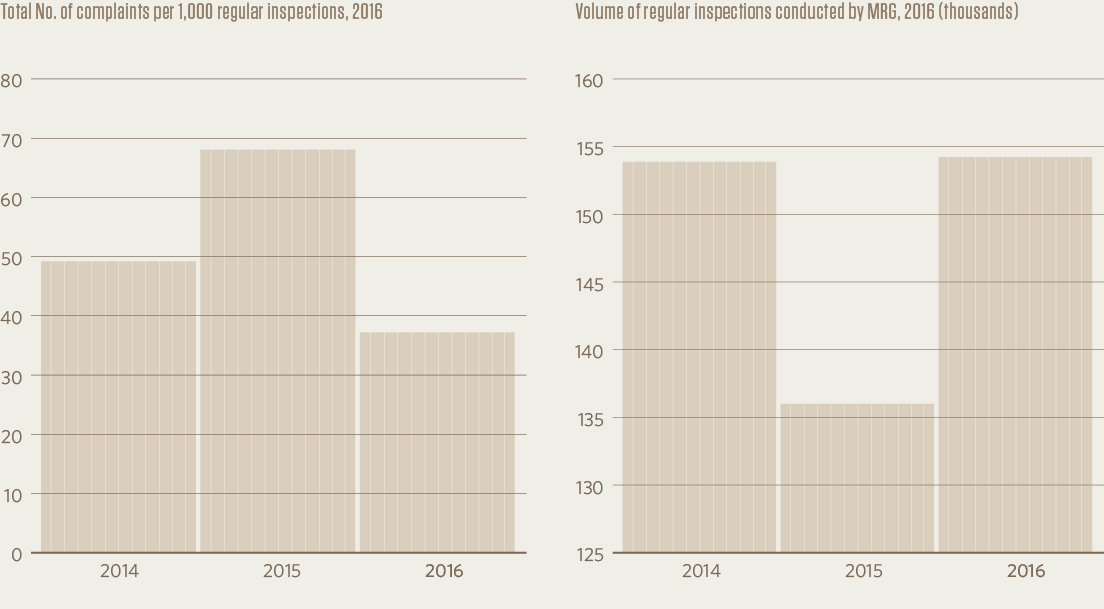
During this first year of entry into force of Royal Decree 984/2015, adaptation by Madrileña Red de Gas has allowed us to operate the same volume of PIs as in previous years, with a 90% success rate against the plan.
Moreover, and thanks to the PI process, Madrileña Red de Gas can detect incidents in receiving facilities or gas meters that are in an irregular situation and can thus locate manipulations of meters (in which the gas that runs through the installation is not recorded correctly and in full) and potentially dangerous incidents and anomalies which could lead to a shortage of supply until the anomaly is corrected, preventing adverse consequences.
Specifically, we have conducted campaigns for the recovery of PIs not achieved in the regulatory period, of these, we have detected 4% major anomalies preventing these potentially dangerous cases.
Home Services
The reorganisation of home services operations undertaken by Madrileña Red de Gas in the past has contributed to the improvement in results achieved. Two distinct groups of intervention should be differentiated: those generated at the request of the suppliers and those launched proactively by the company for the verification and control of the facilities; the aim being to ensure the correct operational performance.
In relation to the operations requested by the suppliers or directly by the end consumer, it should be emphasised that the volume of requested disconnections, shut-offs and reconnections fluctuates throughout the year. It therefore requires an efficient, agile and well-structured organisation that can assume this variability in volume without affecting other scheduled jobs, running them successfully in the shortest possible time.
In general terms, the evolution obtained by Madrileña Red de Gas in the last few years has been very positive. Both in the case of disconnections at customer’s request, and valve shut-offs, the success rate this year has been the highest for the past three years.
The increase in the success rate of Madrileña Red de Gas has been possible thanks to the incorporation of new procedures and the improvement of existing ones. This has led to greater efficiency and greater dynamism in managing the work.
Achieving these objectives has also been assisted by the incorporation of ‘vertical work’ in our day-to-day activity in the field. This initiative has enabled us to achieve greater accessibility to gas facilities. Both the continuous evolution of our information systems, enabling rapid adjustment to the needs of day-to-day operations, and permanently design improvement of the valve shut-off locks used to ensure the safety and non-manipulation of gas installations have also improved field work success.
In addition, we should also mention the constant campaigns for verification of meters performed by MRG during this financial year, which have implied a rapid growth in the number of operations performed. With respect to the 17,672 interventions carried out in 2015, 119,740 were performed in 2016, which has led to an increase in the number of meter replacements, with 9,356 in the last year.
Thanks to the activity of the meter verification, we have achieved greater control, in the field and through IT, of all security elements that reduce the chances of manipulation and, therefore, represent greater safety of the user and installation.
Readings
One of the objectives of Madrileña Red de Gas for 2016 was to have the highest possible number of real consumption calculations for our users, in order that the suppliers have better information to invoice their end customer.
This goal has encouraged several lines of action, such as:
- Nominal pressure in the meter regulator. Over two meter reading cycles, all meter regulators have been checked, verifying that the pressures were the same as the ones used to calculate energy in the system.
- The updating of security tags. The numbers of the security tags seal or, if appropriate, the absence of them have been checked, with the serial number being entered in our database.
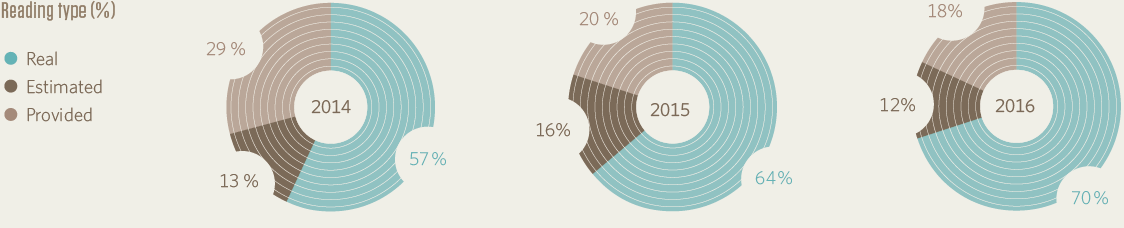
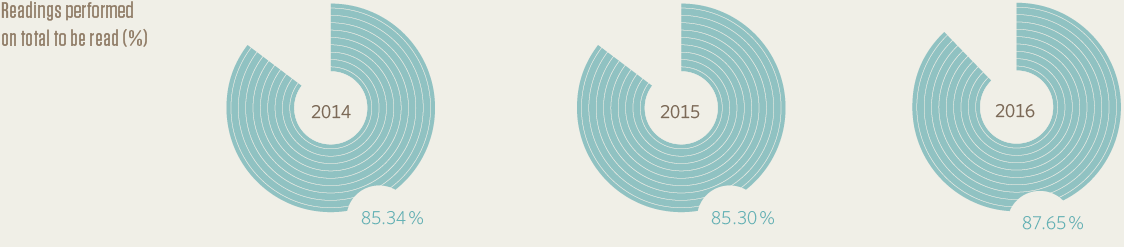
On the other hand, this year we have also promoted a new model of territorial distribution of contracts for readings, which has led to an improvement in the quality of the readings performed. Compared to the previous year, we have increased by 7% the number of real readings, leading to a reduction in estimated meter reads, and we have increased the total number of readings per reader by 2.6% as against 2015.
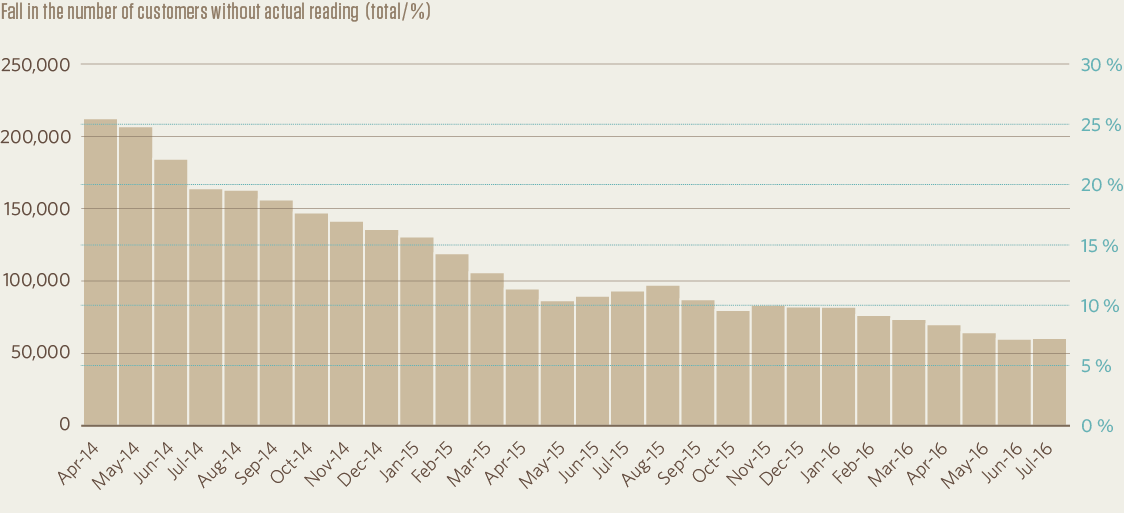
From a situation in which 90,864 supply points had no real reading in the previous 12 months on 30 June 2015, throughout this financial year we have designed special routes for the recovery of real readings. This has allowed us to reduce by 4% the number of customers in this situation. We currently have at least one real reading in the past 12 months in 93% of our supply points.
Information systems
We are firmly convinced that the function of information systems must be to maximise the impact and the benefit of the company. That is why at Madrileña Red de Gas we have integrated this department within the business unit. This integration has meant that the whole area is aligned and agile in responding to the needs of the business.
In Madrileña Red de Gas we identify the portfolio of projects handled during the year on the basis of the information obtained through the demand for systems, mandatory legislative changes, continuous maintenance projects and updating of the environment and existing capacities. On each of the various projects continuous monitoring has been carried out.
This approach has allowed us to develop our own applications in very short periods of time, such as:
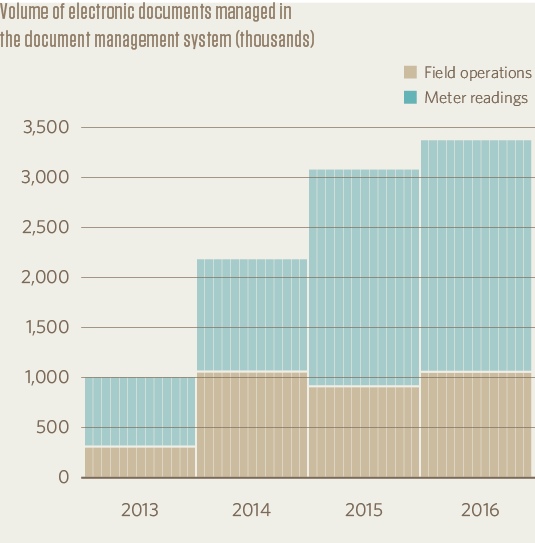
- Development of operational management applications in the field for the activity of meter registrations, household operations and periodic inspections (three months). In addition, applications for readings and field operations management have allowed the dispatch of a total of more than three million documents during the last financial year.
- Development of the application to check the service status of meters in a building and to register anomalies detected (two months).
- Development of the platform for the registration of periodic inspections by the installation companies (1.5 months).
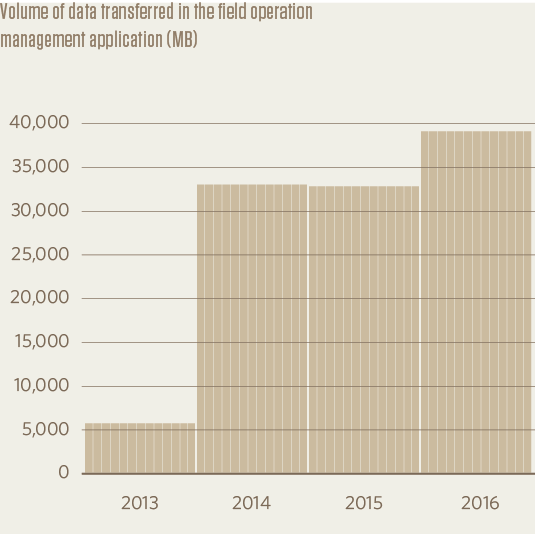
- Document management in the cloud where all the records and photographs taken both in field operations and as readings are conserved. In this financial year, we have transferred to the manager almost 40 Gb of data through mobile devices.
Sustainability
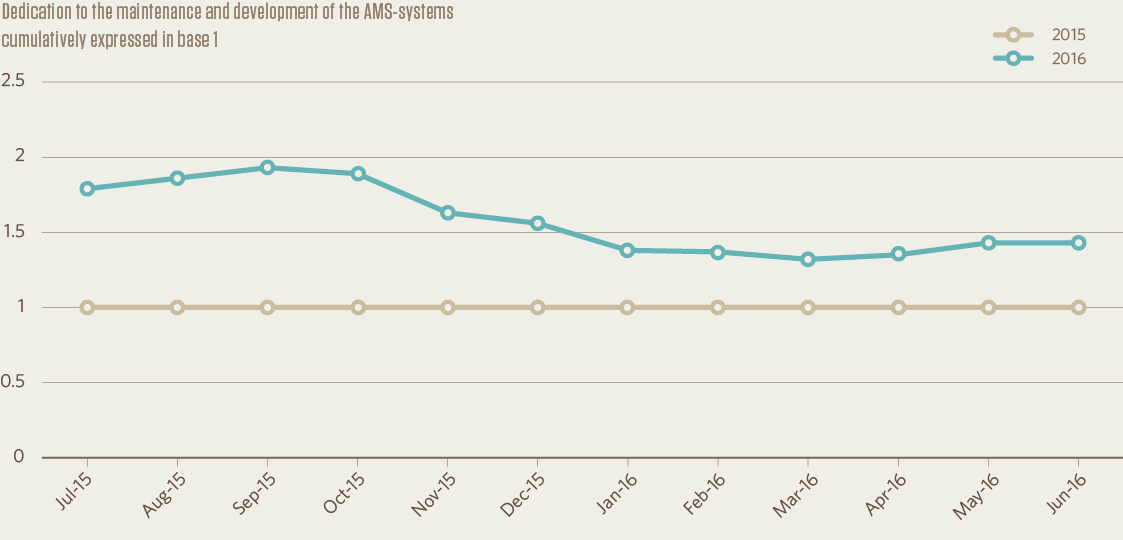
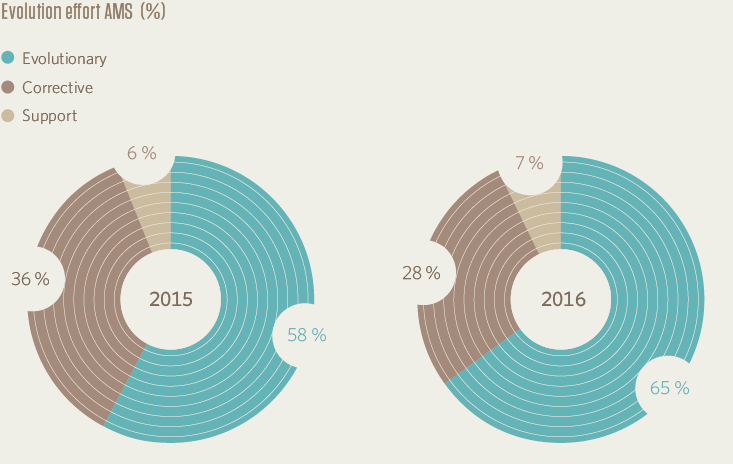
Since our inception, Madrileña Red de Gas has seen an increase in the effort on the maintenance and evolution of systems (AMS), especially the work dedicated to new developments.
The proportion of hours that the company has dedicated to evolution on systems has increased from 43% the previous year to 65% this year.
With this increase of focus, MRG has achieved a noticeable improvement in the time taken to carry out work in corporate information systems management; the average time for validation and production has decreased by 16% from 2015, and stands at 6.2 days.
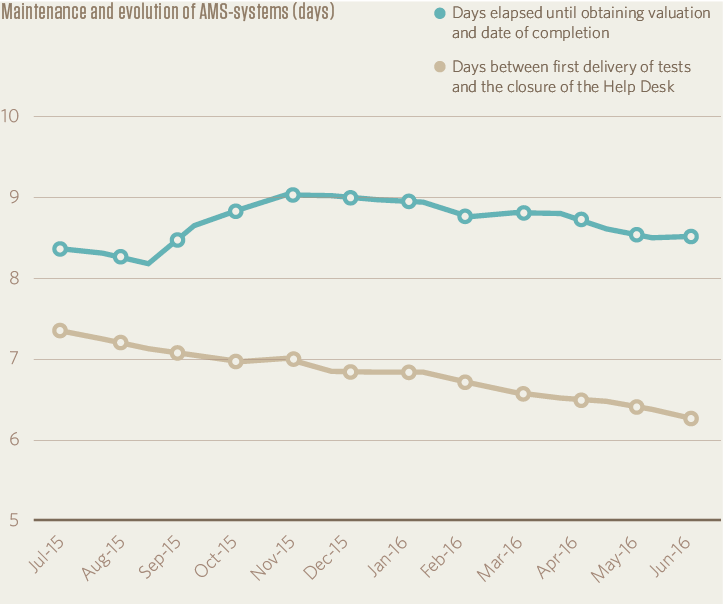
The optimisation of resources, thanks to good management with our outsourcers, and the renegotiation of excellent and efficient procedures, has helped Madrileña Red de Gas undertake all the above while keeping the OPEX costs down.
On the other hand, and according to benchmarks in the utilities sector, the return on investment (ROI) has been very favourable. MRG offers the same service in all aspects related to information technologies, and with fewer resources than larger distributors.
At Madrileña Red de Gas we operate with a high degree of automation of processes thanks to the intensive application of technology. The proof of this is the volumes of data generated in communications between the various distributors and our business systems to meet all the needs of the customers.
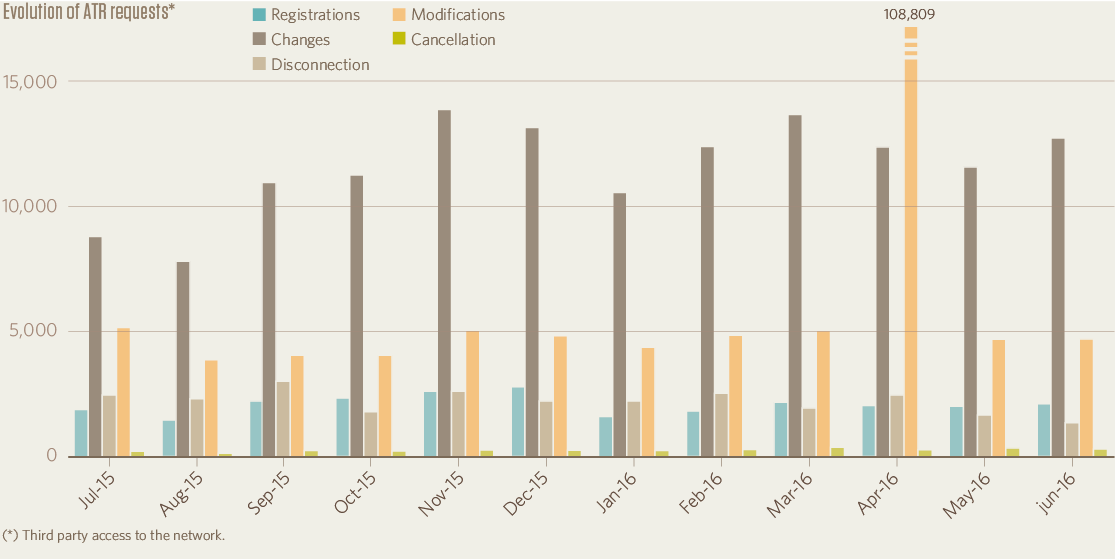
During this year, the volume of requests to distributors has been maintained in each of the processes of management of access of third parties to the networks (ATR); more than 354,000 requests have been processed.
Among these processes, the activity which has most volume is the request for a change of supplier. This year has seen Madrileña Red de Gas handling more than 139,000 requests of customers. Of these, more than 118,000 have been successfully resolved.
For MRG it is extremely important not only to attend to all requests received from customers through the suppliers, but to do so with the highest quality and in adequate time periods. To achieve this, with the aim of reducing these response times, each year we optimise our operational framework.
Opinions
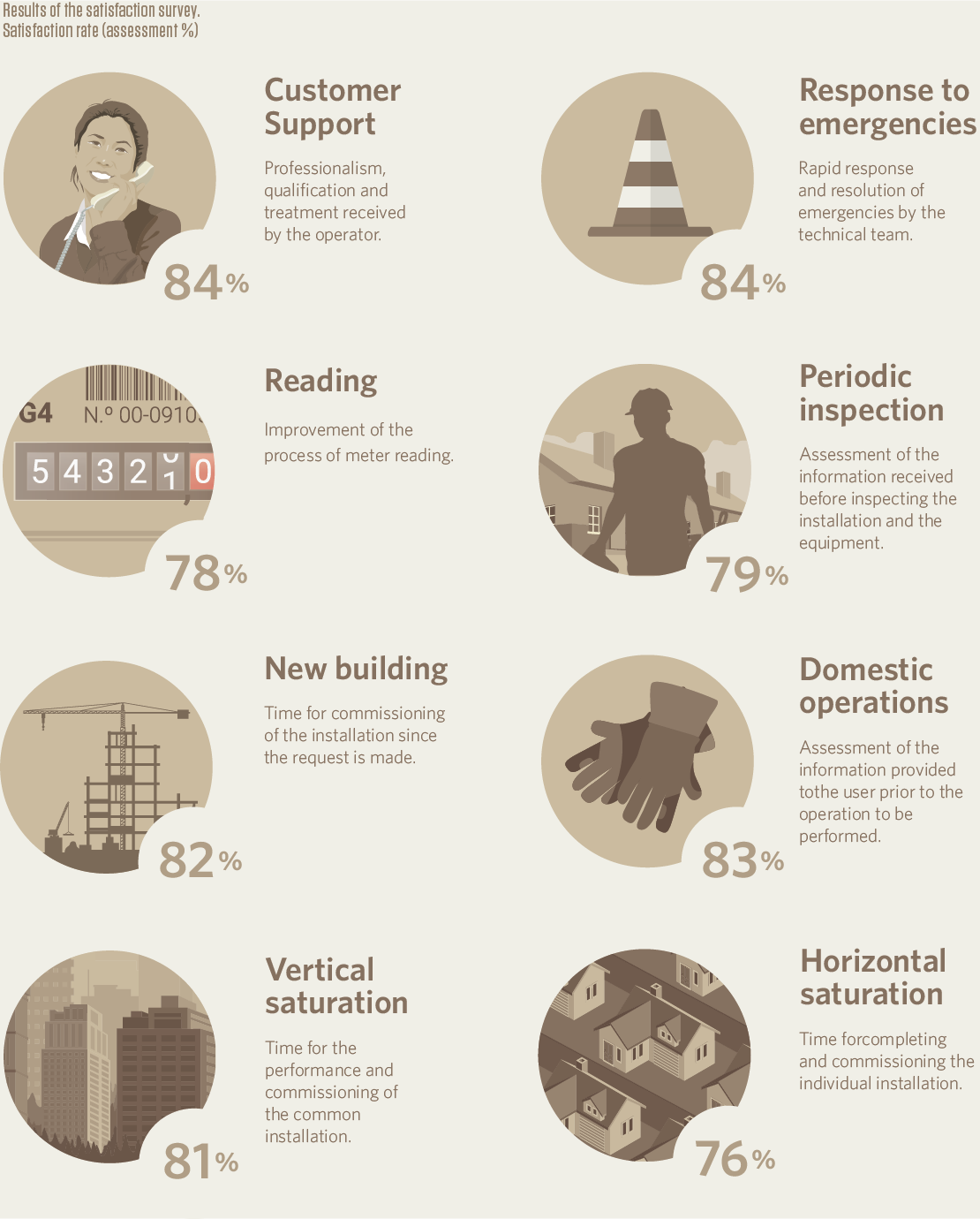
With the firm intention to increase the satisfaction of our users, for the second consecutive year, in Madrileña Red de Gas we have continued to seek and analyse the opinion of our customers, in order to achieve a better understanding of their needs. This helps us set targets aligned with the expectations of the customers.
This new round of surveys, carried out between January and February 2016, has been performed on eight service segments.
To summarise, the trends in the results of the first and second rounds of surveys are:
- Index of overall satisfaction of 78.8%, which is the global measurement of the ability of MRG to satisfy its customers.
- 44.6% of MRG users surveyed would recommend us to family and friends. Thus, the global average recommendation is 7.54 out of 10.
- The level of fidelity or loyalty among the surveyed users, also known as NPS or Net Promoter Score, is 21.1%.
SERVICE
To customers
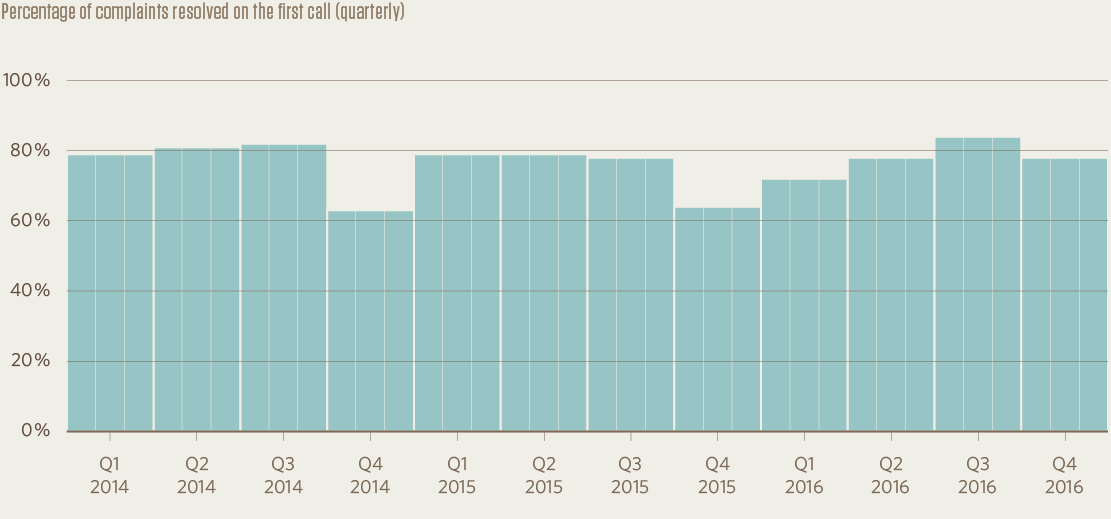
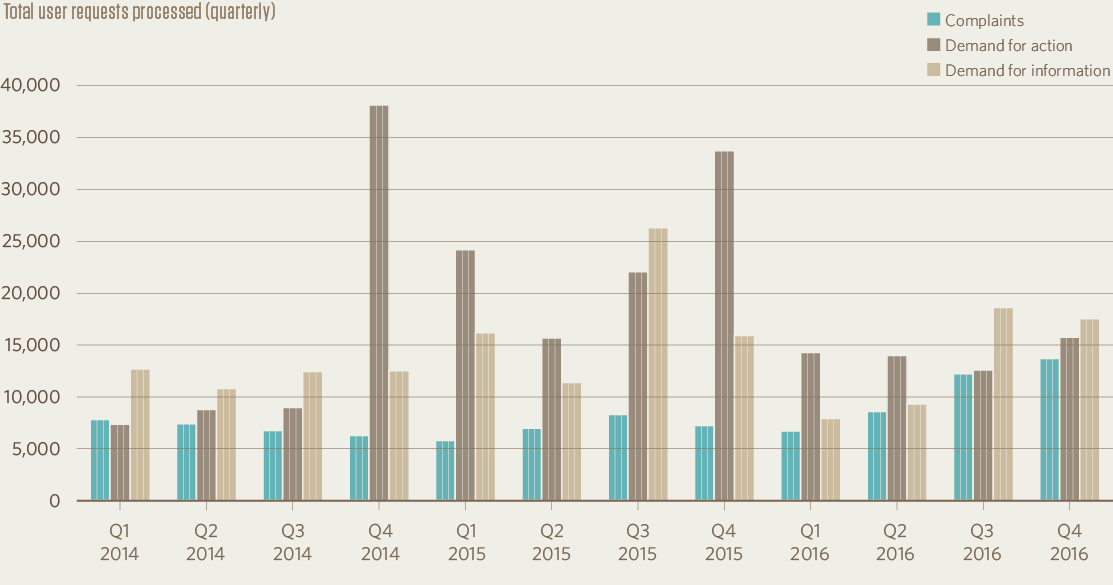
The proposal of the CNMC to publish quarterly data on the processing of claims from customers requires the companies in the sector to show greater transparency in relation to the care provided to their users. This initiative is in line with the best practices of the European utilities, which recommend publishing customer benchmarks.
With this objective, Madrileña Red de Gas has undertaken an internal project which, in the first instance, already includes the publication of results of various requests sent by our customers, such as requests for information, complaints, demands for action, etc.
Together with practices promoting clarity and transparency, this year in Madrileña Red de Gas we have enhanced the capacity for resolution of our customer centre, promoting continuous improvement through daily monitoring with agents and partners of the telephone platforms and the implementation of quality tables with active listening. We have also integrated in the activity of the company the customer service and training models which result from the implementation of new processes in Madrileña Red de Gas.
Continuous improvement in customer service is essential for Madrileña Red de Gas. Our efforts have been devoted to increasing the degree of customisation in the resolution of claims. For this purpose, we have made improvements in the systems that keep data from our users constantly updated, so that we can make a rapid, personal and satisfactory response to each customer’s need.
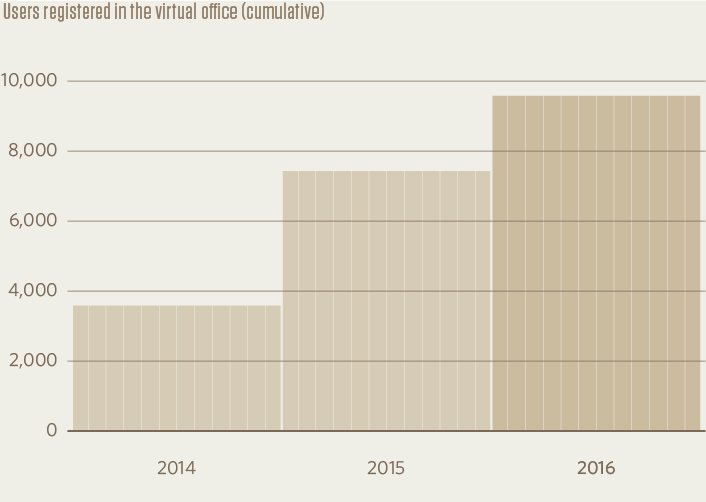
In addition, and to facilitate communication with our customers at all times, we have a virtual office through which we can ask for information, facilitate readings, manage and check the status of their requests, etc.
To suppliers
To comply with the requirement of the CNMC to harmonise the management and processing of requests related to processes in the distribution of natural gas, or actions by the company in relation to claims of customers of the distribution companies, Madrileña Red de Gas has implemented a new claims module associated with the Transport-Distribution Communication System (SCTD). Through this system, both suppliers and distributors of natural gas can manage and resolve the requests made.
The result of this adaptation translates into much more fluid communication between the partners in the sector, which shortens the response times and increases the quality of management.
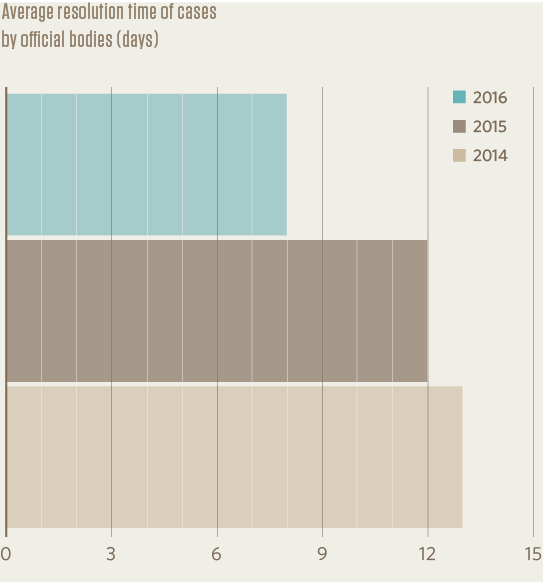
To official bodies
In line with our policy to maintain a constant dialogue with the various official bodies of the Community of Madrid, MRG is continuing to hold regular meetings in order to respond to and expedite the appropriate resolution of requests from customers which have been channelled through such bodies.
To the partner companies
In Madrileña Red de Gas, we consider that a greater volume of information in the activity means greater involvement, proactivity and effectiveness in the service provided.
This information which we provide to our partner companies is associated with a consolidation of business plans signed in the horizontal saturation market by these companies. Specifically, this financial year has seen an increase of 65% of companies loyal to Madrileña Red de Gas, and an increase of 25% of the existing field sales representatives.
Special mention should be made of the large-scale consumption market, where 59% of the GWh put into service have been managed by partner companies that have subscribed to our business plans, which has led to an increase in consumption of 5% over the previous year.
In addition, and in order to strengthen the commercial action derived from the public offering, MRG has extended the collaboration agreement with the Energy Business Association ASEFOSAM. This agreement involves the active participation of 500 installation companies. This high participation has resulted in an increase of 4% of the total of commissionings in the vertical saturation market which have been managed by companies participating in this agreement.
On the other hand, as a company that requires major capacity and quality in the implementation of activities in the field by its partners, Madrileña Red de Gas has focussed part of its objectives on providing maximum real-time information to coordinators of teams, so that they can react quickly to possible changes and adapt not only the necessary teams but also the procedures to be followed.
Accordingly, in Madrileña Red de Gas we are continuing to develop improvements in applications for capturing information in the field on Android devices. In this way we can know with full transparency the full potential of all our supply points in a unit and the uptake of new connections, or query in real time the operator carrying out visits to the supply point, the number of meters, information on the state of the supply point, etc. Today, more than 200 partners use these applications.
In addition, we have an application that enables us to analyse market potential with a view to its commercial follow-up. This application facilitates the creation of studies and the obtaining of reports from customers captured and commissioned. Thus, commercial operators who are in the field have access to the monitoring of the potential and portfolio management, and they can view all studies of residential and commercial potential, as well as update the situation of units on site.
Currently, the development of these two applications has increased productivity in the marketing and final commissioning of the supply points.
Another example is control by geolocation, through which the operator route is displayed with results by work order (OT) and the universal code of supply (CUPS). This makes it possible to detect any non-compliance situations and obtain information on the schedule of execution and results by operator. These facilitate the location of efficient or inefficient patterns, the location and number of operators in real time, the number of OTs assigned against the timetable/capacity of the operator, etc.
THE NETWORK
In the second quarter of 2016, the sectorisation of the interconnections between the networks of Madrileña Red de Gas and Gas Natural Fenosa was completed. Currently, the only item pending from Gas Natural Fenosa is the implementation in service of the Getafe-Usera transport pipeline, which will be connected using the supply point to the distribution network of Madrileña Red de Gas, with a supply at 16 bar.
All this has prompted the redefinition of our network model and its immediate adaptation to the various information requirements on balances and sectorization. This model has had to be adapted to an environment which has changed in terms of the levels of information required by the regulators.
The redefinition of the network model gives us better visibility with respect to the differences in all the distribution networks operated by Madrileña Red de Gas. Thus, it is possible to study and to undertake actions to improve the ratio of misbalances in sectored networks.
In addition, it allows us to make a division of the distribution zone at the level of intermediate RMS within each network, creating smaller sectors that improve our analysis and reinforce diagnosis and decision-taking in the field of losses.
The Control Centre (CCD)
From November 2015, the Madrileña Red de Gas control centre has been operating independently all the remote information units of the 159 regulation and metering stations (ERM), with approximately 7,000 signals, in addition to multiple facilities in our network which also have remote control and provide information on pressures, temperatures, flow tariffs, filter clogging, access control, etc., enabling us to maintain high standards of quality and safety for the supply to our users.
On the other hand, the MRG control centre is designed to have a total record of gas emissions that circulate daily through our networks and which are used for the achievement of the gas balance in the system, in order to manage the information from the 11 transport-distribution connection points (TDCP) and the 17 distribution-distribution connection points (DDCP) of Enagas and Gas Natural Fenosa, by checking them each day against the volume received through the SL-ATR system.
This system is able to offer the information on flows of gas at average pressure in 70 isolated areas, allowing us to create internal energy balances on a monthly basis that facilitate the comparison of the consumption obtained through remotely metered or physical readings of the customers, both industrial and domestic, associated with each of them.
The purpose of these balances is to measure various parameters that allow appropriate management of our network, avoiding non-technical losses; this is an indicator of the technical, commercial and administrative efficiency of Madrileña Red de Gas in providing, controlling and continually improving the efficiency of the service demanded by our customers.
In this financial year, due to the addition of new facilities to the SCADA system, such as the satellite LNG plants that we commissioned in 2015, we have made numerous improvements in the design and equipment of telecommunications in MRG with the aim of achieving a high-quality system.
Servicing calls
Once again, the Madrileña Red de Gas emergency service has achieved an extraordinary response to more than 13,000 emergency calls received. Our primary objective has been the improvement of response times for calls treated as priority (smell of gas, fire or explosion). For another year we have reduced our average response time, which was 27 minutes.
The management of gas delivery functions, established by the regulations in force, and the new signal management functions from the control centre, have been taken on and carried out regularly by the emergency coordination team for all periods outside normal hours.
In addition, the activities of urgent care have been combined with the checking of meters for the detection of tampering, which increases the safety of the facilities of our users.
Maintenance
Within the maintenance plan of Madrileña Red de Gas for this year, transport management and LNG unloading have been taken on and performed regularly, as well as preventive maintenance of the five satellite plants in the towns of Torrelaguna, Guadalix de la Sierra, Talamanca de Jarama, Valdetorres de Jarama and Zarzalejo.
We have complied in full with the maintenance program established by the regulations, as well as our parameters for quality control of the network through surveillance, leak tests and maintenance of RMS, cathodic protection and network valves.
With a total of 5,691 km of network and 135,294 tested connections, the third round of network tracking completed this year has ended with very good results. 1,231 leaks, of which 1,048 corresponded to the network and connections, have been detected. This figure translates into a leak ratio of 0.224 leaks/km and all of the leaks have been corrected or repaired.
In addition, 745 meters of network renewal have been performed, 263 of setbacks, two EPC and ten refurbishments of RMS, and we have replaced the single fibre-cement tranche with polyethylene.
All these data support the excellent status of the distribution networks of MRG.
Similarly, Madrileña Red de Gas has strengthened the supervision of the plan for the prevention of occupational risks (PRL) for contractors and its own personnel, with support for activities in the field. This has improved the prevention of the risk of accidents in all the activities associated with the maintenance of our distribution network.